


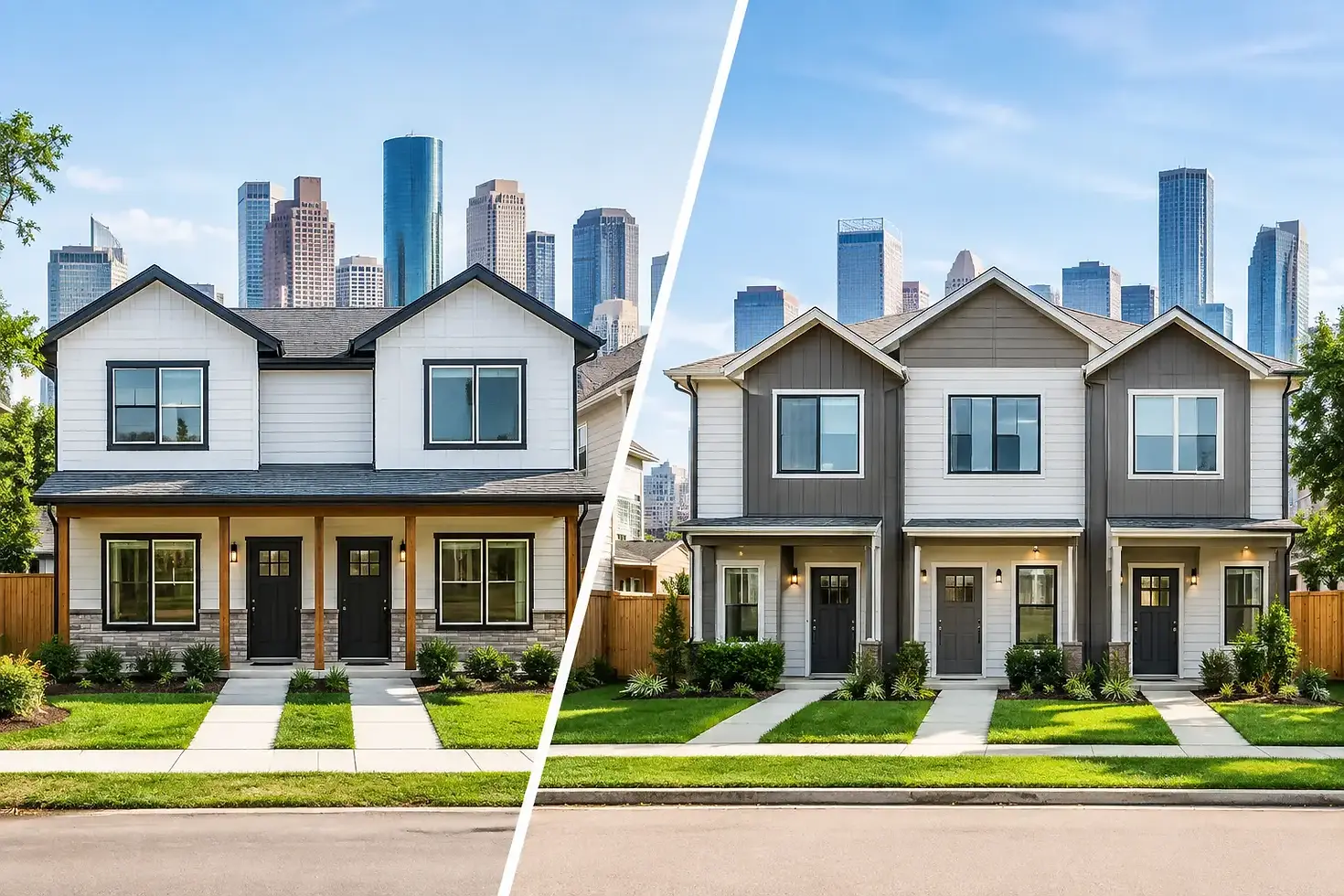
Duplex vs Triplex for Houston Property Buyers

A two-unit property can feel like a manageable first step into rental ownership. Add one more unit, and the income picture may improve - but so do the decisions around financing, operations, parking, maintenance, and tenant relations. When weighing duplex vs triplex, the better choice is rarely the one with the most doors. It is the one that fits your budget, risk tolerance, time, and long-term plan.
For Houston-area buyers, the details matter even more. A property’s location, flood history, local rental demand, utility setup, and condition can change the numbers quickly. Before making an offer, look past the unit count and evaluate how the building will work as a home, an investment, or both.
Duplex vs Triplex: The Basic Difference
A duplex contains two separate dwelling units on one property. The units may sit side by side, one above the other, or be configured as a main house with a distinct secondary unit. A triplex has three separate dwelling units on the same property.
Both can serve several purposes. An owner-occupant may live in one unit and rent the others. An investor may rent every unit for monthly income. A buyer may also use the property as a multigenerational housing solution, provided the layout, zoning, and lease arrangements support that plan.
The key difference is straightforward: a triplex has one additional income-producing unit. That additional unit can create more revenue, but it also introduces another tenant relationship, another turnover risk, and potentially more repairs, utility usage, and management work.
When a Duplex Makes More Sense
A duplex is often the more approachable option for a first-time investor or a buyer who wants to house hack without taking on a larger multifamily operation. Living in one unit while leasing the other can help offset a mortgage payment while keeping the property relatively simple to oversee.
With only two units, a duplex usually has fewer moving parts. There may be less wear on common areas, fewer lease renewals to track, and fewer chances for multiple tenant concerns to arrive at once. If the property has separate meters, separate entrances, and clear parking assignments, day-to-day ownership can be especially straightforward.
A duplex can also be a strong fit when privacy is a priority. Some buyers prefer a side-by-side layout where each household has its own entrance, outdoor space, and parking area. This setup can make the owner-occupant experience feel closer to single-family living than a small apartment building.
That said, two units create less income diversification. If one unit becomes vacant, half of the rental income is gone. A major repair, such as HVAC replacement or foundation work, has to be absorbed by revenue from only one remaining unit or from the owner’s reserves.
When a Triplex Can Be the Better Investment
A triplex may appeal to buyers who want more rental income without stepping into a larger apartment property. Three units can spread vacancy risk more effectively. If one tenant moves out, two occupied units may still help cover operating expenses and debt service.
The third unit can also make an owner-occupied purchase more workable in higher-cost areas. A buyer who lives in one unit has two potential rental streams contributing to the property’s monthly costs. For investors, the added unit may improve overall cash flow if purchase price, rents, and operating expenses are aligned.
However, triplex ownership is not automatically more profitable. A three-unit property may carry a higher purchase price, insurance premium, tax bill, and repair budget. It might also require more attention to tenant screening, lease enforcement, maintenance coordination, and turnover planning. The return depends on the actual income and expense picture, not simply the number of doors.
Triplexes can be particularly attractive in neighborhoods with reliable rental demand from working professionals, families, and students. Still, buyers should verify that the unit mix matches what local renters want. Three cramped units with inadequate parking may underperform a well-designed duplex with strong demand and lower operating costs.
Financing Is Similar, but Your Numbers Still Matter
For many conventional and government-backed loan programs, a property with one to four residential units is treated as residential real estate rather than commercial real estate. That can make duplexes and triplexes accessible to owner-occupants using financing options that are not typically available for larger multifamily buildings.
Lenders often consider projected rental income differently depending on the loan program, your experience, and whether you will occupy a unit. They may require leases, an appraisal with a rent schedule, proof of reserves, or a documented history of rental income. Do not assume every dollar of expected rent will count toward qualification.
Investment financing can bring different down payment and reserve expectations. A lender may also scrutinize the property condition more closely if deferred maintenance could affect value or habitability. Before shopping aggressively, speak with a qualified lender about how they will evaluate a duplex or triplex in your specific situation.
Compare Income After Expenses, Not Before
A listing’s gross rent is only the beginning. The useful question is how much income remains after the real costs of ownership. This is where buyers can avoid an expensive mistake.
Start with realistic market rent for each unit, not an optimistic number from a listing. Then account for vacancy, leasing costs, repairs, capital improvements, insurance, property taxes, utilities paid by the owner, lawn care, pest control, and property management if you will not self-manage.
In Texas, property taxes and insurance can materially affect a property’s monthly performance. Insurance deserves special attention for properties in the greater Houston area, where flood exposure, wind coverage, and prior claims can influence both availability and cost. Ask for current policies and claim history when possible, but obtain your own quotes before relying on seller estimates.
Also review who pays for water, gas, and electricity. Separate meters give owners and tenants clearer responsibility. A building with one shared water meter is not necessarily a deal breaker, but the lease structure and utility allowance need to be reflected in your underwriting.
Evaluate the Building Like an Operator
The difference between a good duplex or triplex and a difficult one often comes down to operations. A building can show attractive rent on paper while creating recurring issues for the owner.
During due diligence, pay attention to roof age, HVAC systems, plumbing lines, electrical panels, drainage, foundation condition, windows, and exterior siding. In older small multifamily properties, deferred repairs may be spread across every unit. A single plumbing problem can affect multiple households at once.
Look closely at layout and access as well. Are entrances private? Is there enough parking for the likely number of vehicles? Are mailboxes, trash storage, and outdoor areas clearly assigned? Can a maintenance technician access equipment without disrupting tenants? These details shape resident satisfaction and reduce avoidable conflict.
Existing leases deserve the same level of review. Confirm rent amounts, security deposits, lease end dates, pet agreements, utility responsibilities, late balances, and any concessions. If a seller represents units as occupied, verify occupancy and payment history rather than relying on a rent roll alone.
Owner-Occupant or Full Investment Property?
Your intended use should guide the decision. An owner-occupant may accept slightly lower cash flow in exchange for living in a preferred location while rental income offsets housing costs. In that case, privacy, noise transfer, parking, and the condition of the unit you will occupy may matter more than maximizing every possible rent dollar.
A full investor, on the other hand, should focus on durable operations. That includes tenant demand, achievable rents, maintenance reserves, lease quality, and a plan for vacancies. A triplex may offer better income stability, but only if the property can be managed efficiently.
There is no universal answer to duplex versus triplex. A clean duplex in a strong rental location can outperform a poorly configured triplex with high expenses. Likewise, a well-maintained triplex with separate utilities and consistent demand may provide a more resilient income stream than a duplex with one oversized, hard-to-rent unit.
Questions to Answer Before You Buy
Before submitting an offer, make sure you can answer four practical questions: What are the verified rents today? What will the property cost to operate after realistic reserves? What repairs or upgrades are likely in the first two years? And who will handle leasing, maintenance, rent collection, and tenant communication?
If you plan to manage yourself, be honest about availability. Small multifamily ownership can be rewarding, but it is still an operating business. A late-night plumbing call or a lease renewal does not wait for a convenient time. Owners who prefer a more hands-off approach should budget for professional management from the start rather than treating it as an afterthought.
ONEInnovative.net works with owners and investors who need support beyond the purchase, including leasing and ongoing property oversight. The right structure can make rental ownership easier to manage, especially as your portfolio or responsibilities grow.
Choose the property whose income, condition, and management demands you can confidently carry through a vacancy, a repair, and a changing market. That is usually the investment that gives you the most room to move forward.


Comments